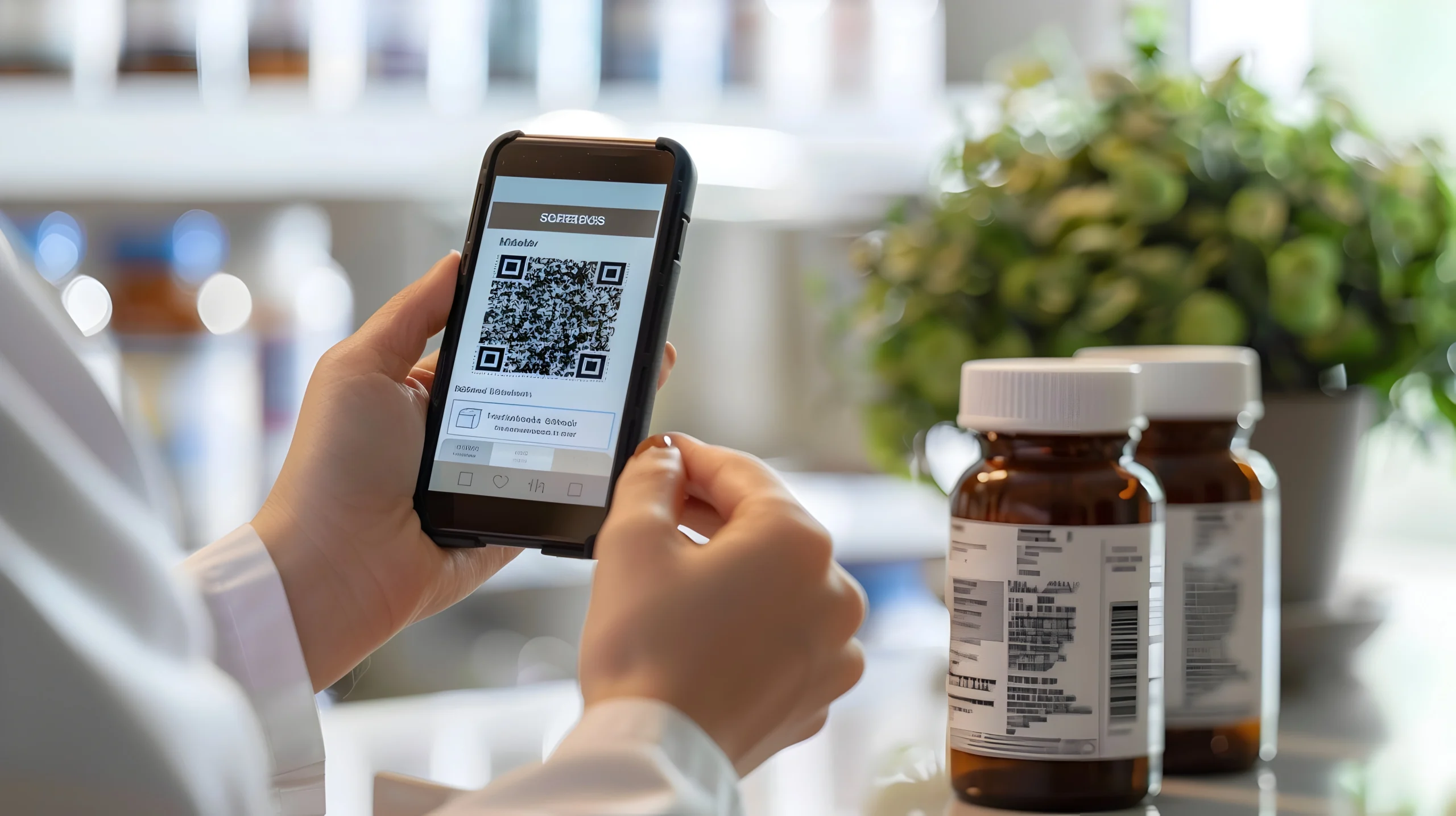
The importance of serialization in pharmaceuticals in the Indian pharmaceutical sector is quickly evolving to be a core technology of supply chain integrity, patient safety, and regulatory adherence. With the increased automation of manufacturing and the sophistication of distribution channels, the necessity to identify, trace, and validate each individual unit of medicine in the lifecycle uniquely has become of paramount importance. Product serialization ensures that each saleable unit has a digital identity that can be verified and utilized to create analysis, recalls, and anti-counterfeiting actions between manufacturer, distributor, and pharmacy.
Serialisation in this case is not merely the method of printing a code on a package, but capturing, processing, storing, and sharing data in such a manner that can facilitate transparency, traceability, and security in the domestic or export supply chains. This blog addresses the practical and technical features of serialization implementation in pharmaceutical manufacturing, with an obvious emphasis on the fact that serialization is an integrated network, and not a standalone need.
Serialization, in the simplest definition, is the process of giving each saleable unit of a pharmaceutical product a unique identifiable number. These identifiers are commonly coded in machine-readable 2D barcodes like QR codes or GS1 DataMatrix symbologies. Each identifier holds several pieces of data, such as the product number, batch or lot, expiry date, and a serial number that uniquely comprise the digital signature of that particular unit. The term serialisation meaning in this context, refers to this comprehensive process of uniquely identifying and tracking individual units at every stage.
Manufacturers can capture and store these unique identifiers in manufacturing and supply systems and:
Serialization therefore provides the foundation of serialization pharmaceutical approaches, which allows medicines to be subject to digital tracing instead of being an anonymous physical container.
The serialization process in India started with export compliance standards where pharmaceutical exporters were required to comply with foreign trace and track standards such as those by the Directorate General of Foreign Trade (DGFT). These requirements at first pertained to tertiary packaging (cartons and cases), and subsequently to secondary packaging. The industry has been increasing its traceability, authentication of products, and digital reporting processes over time by becoming more comprehensive.
Serialized manufacturing is likely to become an essential component of manufacturing processes by 2026 due to the following reasons:
Serialisation is also a foundation of wider quality and compliance standards in manufacturing, which serve as an audit trail to be referred to as part of internal quality verification and external regulatory checks.
Serialization refers to the process of assigning, printing, verifying, and recording unique serial numbers on pharmaceutical packaging components, typically secondary cartons and, where required, primary packaging. It is not a manual process. It is an integrated system combining software, industrial printers, vision inspection systems, aggregation workstations, and enterprise serialization platforms.
At PharmaSecure, this integration is achieved through the psID Manage (enterprise level) and psID Maestro (line level orchestration) platforms, along with the TruTrak® hardware suite.
The process typically includes the following steps:
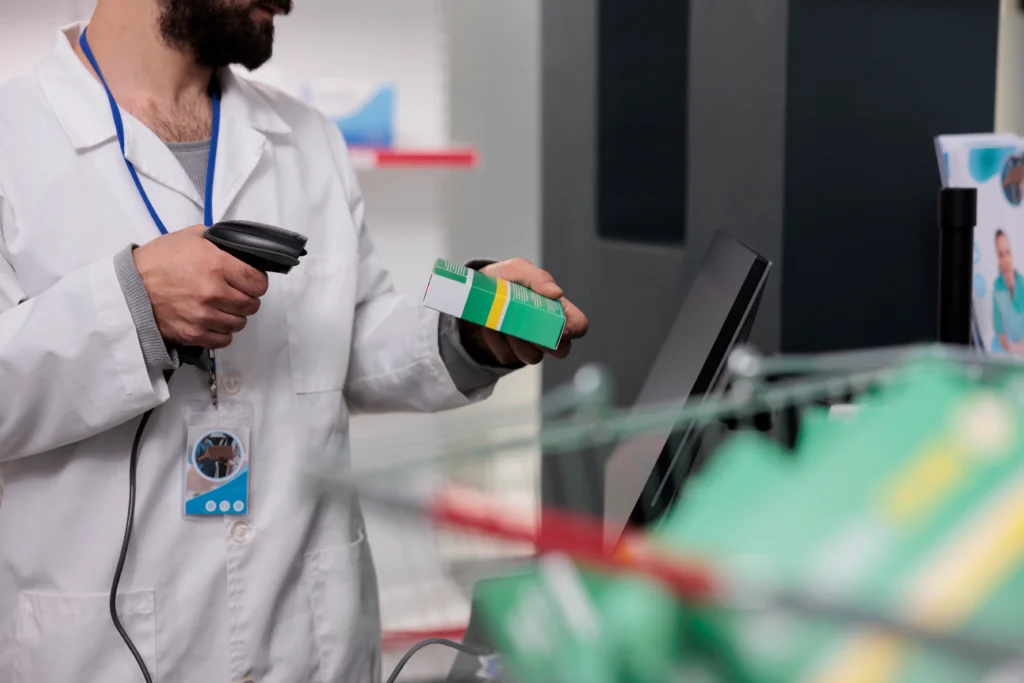
Serialization uniquely identifies individual saleable units. When these units are packed into bundles, cases, or pallets, serialization aggregation establishes structured parent–child relationships between packaging levels. Each higher packaging level, such as a case or pallet, is also assigned its own unique identifier and is digitally linked to the serialized units it contains.
Parent–child relationships are configured so that scanning a case or pallet provides visibility into all the serialized units within it.
There are two significant advantages to this hierarchy:
Aggregation systems must be configured to accurately capture and maintain these hierarchical relationships. PharmaSecure’s aggregation solutions, integrated through the psID® platform and TruTrak® line hardware, ensure real-time capture, validation, and recording of aggregation data across packaging levels.
Real-world serialization is driven by software platforms that manage large volumes of data and integrate with production systems.
A serialization management system is responsible for generating, assigning, and monitoring serial numbers across packaging operations. It ensures centralized control, data integrity, and compliance reporting. At PharmaSecure, this functionality is delivered through psID Manage (enterprise-level serialization management) and psID Maestro (line-level orchestration and control). Together, these platforms provide:
These platforms consolidate the logic of serialization in such a way that manufacturers are able to ensure that they run similar operations across various lines or plants.
Serialization data needs to be organised in a comparable manner to guarantee interoperability among systems, enterprise software, partners, and regulatory databases. Standards like GS1 provide the format of identifiers and descriptions of events in a way that systems can send and receive shared data.
Even in India, compliance with GS1 standards enables the recognition of products in logistics networks and export markets. Standardisation also enhances integration with inventory, quality, and enterprise systems.
After capturing and storing events, manufacturers usually have to share the data with external partners, distributors, contract manufacturers, or regulatory repositories. This involves standard export formats and secure transmission protocols to protect integrity of data.
Systems also include verification mechanisms that validate serialized codes when scanned at downstream points in the supply chain. When a distributor, warehouse, or partner scans a code, the system checks it against the centralized serialization database to confirm its authenticity, status (commissioned, shipped, decommissioned), and associated packaging hierarchy. These verification processes are typically part of a comprehensive track-and-trace solution, ensuring product integrity and regulatory compliance across the supply chain.
PharmaSecure offers a suite of solutions designed to support the technical implementation of serialization and traceability workflows in pharmaceutical manufacturing. These products are modular, adaptable to different packaging configurations, and built to integrate with existing line infrastructure reflecting the needs of a leading serialisation solution provider India.
The psID® Suite is PharmaSecure’s full serialization and traceability software ecosystem built for pharmaceutical manufacturing, supply chain control, and regulatory compliance. It is designed to support serialization from code generation through aggregation, shipment tracking, and downstream traceability all aligned with global standards such as GS1.
Key components include:
In addition, the suite extends to supply-chain tools such as psID® Repo for cloud-based repository and regulatory reporting, and psID® Trail for downstream track-and-trace support across partners and stakeholders.
Together, this modular software ecosystem enables pharmaceutical manufacturers to manage serialization workflows across all packaging levels, maintain compliance with regulatory mandates, and achieve end-to-end visibility and traceability across the supply chain.
The psID® TruTrak® suite comprises hardware designed to support real-time serialization and aggregation directly on packaging lines. The interoperable serialization machines and workstations enable printing, scanning, and hierarchical data capture while interfacing with vision systems and enterprise software, ensuring operational reliability and data integrity from line to repository.
Serialization in pharmaceuticals is a mission-critical capability that encompasses more than printing barcodes; it demands robust data generation, hierarchical aggregation, event logging, and interoperability across systems. By 2026, serialization will be central to manufacturing practices that prioritise product safety, supply chain transparency, and competitive export readiness.
Understanding both the technical foundations and practical implementations from packaging line hardware to enterprise software and structured data exchange equips manufacturers to build systems that are scalable, reliable, and compliant with evolving mandates.
Technical platforms such as the psID® software suite, including psID® Manage™, psID® Imprint™, psID® Aggregate, and psID® Express, along with the psID® TruTrak® hardware ecosystem, enable fully integrated serialization and aggregation workflows. Together, they connect packaging line operations with centralized enterprise management, regulatory reporting, and supply chain traceability, delivering real-time visibility and compliance-ready serialization across the pharmaceutical value chain.


pharmasecue / August 26, 2022

pharmasecue / January 17, 2022

pharmasecue / December 27, 2021

PharmaSecure is a global track-and-trace, product authentication and consumer engagement company that has helped protect billions of packages through its technology-enabled solutions. Our proven serialization capabilities have enabled large pharmaceutical companies to meet different traceability requirements.





©2025, PharmaSecure Inc. All Rights Reserved.
