Counterfeit drugs are creating risks across India’s pharmaceutical supply chain, affecting patient trust and brand credibility and damaging your brand every day. They’re putting countless patient lives in danger. While you’re working to get quality medicines to people who need them, counterfeiters are copying your packaging, faking your credentials, and sneaking fake products into distribution networks.
Here’s the reality: Traditional security holograms, batch codes, basic serialization they’re just not cutting it anymore. Counterfeiters have caught up. What worked five years ago is breakable today.
That’s where modern product authentication solutions become essential. Not as a compliance checkbox, but as genuine protection for everything you’ve built. When done right, product authentication truly changes the entire game; you protect customers better, track inventory smarter, and stay properly compliant.
This guide walks you through why brand protection demands more than pretty packaging and how the right product authentication technology delivers real, measurable results.
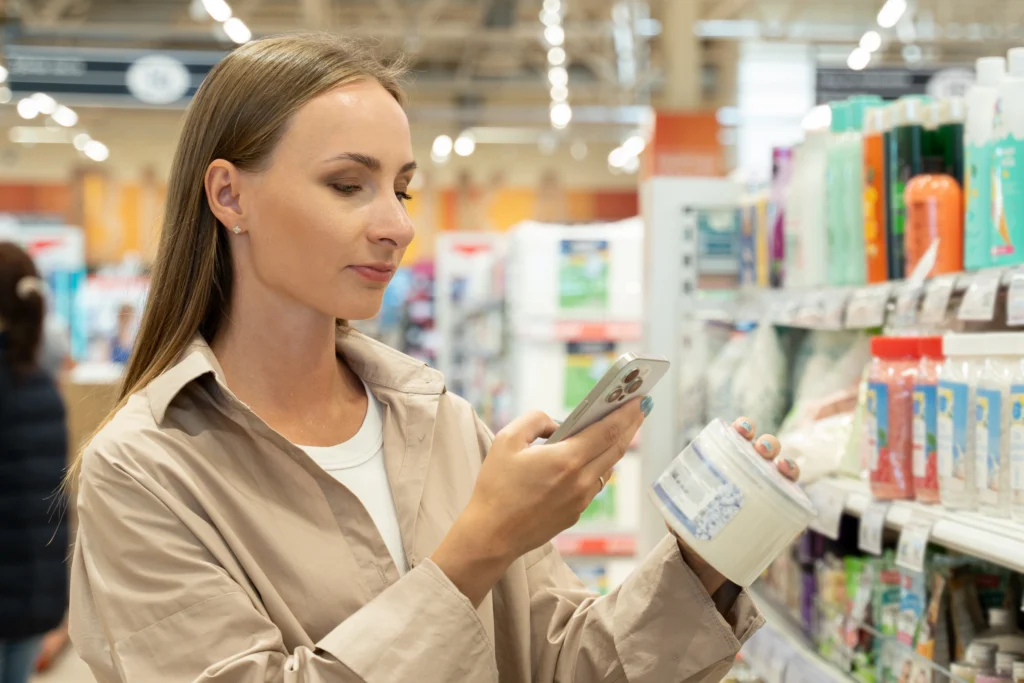
India’s pharmaceutical industry manufactures 60% of the world’s vaccines and 20% of global generics, a $60 billion market under siege. In 2022-23 alone, authorities caught 3,053 substandard drug samples and 424 as spurious. But they’re catching maybe 1% of the problem. The scale of the problem is significant. WHO estimates that at least 1 in 10 medicines in low- and middle-income countries are substandard or falsified. In India, routine regulatory testing continues to identify substandard and spurious drug samples, which makes stronger product authentication an important brand-protection priority.
Here’s why this hits your business hard:
Your current defenses holograms, batch codes, and tamper seals slow casual counterfeiters for maybe 3-4 months. Industrial-scale operations replicate them easily. Real authentication works differently. It uses cryptographic verification that any smartphone user, not a specialist, can verify instantly.
Traditional anti-counterfeiting measures are static. Once counterfeiters study them and reverse-engineer the format, they replicate them at scale.Basic holograms and visible batch codes can be copied or reused by sophisticated counterfeiters, especially when they are not connected to a digital verification system. However, they can still be useful as part of a layered authentication strategy.
Modern authentication needs to be dynamic: something unique to each pack, cryptographically secured, and instantly verifiable.
This is where unique, digitally verifiable codes add stronger protection. Static barcodes? They’re not enough. Every QR code gets created differently billions of combinations, all encrypted. That’s your real protection. When a consumer scans it, the system verifies in real-time whether that code is registered, sold, or flagged. Counterfeiters can’t duplicate your database even if they copy the QR code’s appearance; the lookup fails and the system identifies it as fake.
The key is implementation. Encryption-based systems like PharmaSecure’s psID® generate unique alphanumeric codes printable as QR or Datamatrix codes. No constant cloud connectivity is needed, yet it is scalable and nearly impossible to counterfeit.
Back in August 2023, India’s CDSCO laid down the law: the top 300 pharmaceutical brands had to start putting QR codes or barcodes on all new batches. These codes had to include the drug name, who made it, batch number, dates, and a unique serial code. The idea was simple customers scan it and instantly know if what they’re holding is real.
That deadline’s already behind us. Everything manufactured after August 1, 2023, needs to comply. For brands covered under Schedule H2, batches manufactured after the effective date should comply with the barcode or QR-code labelling requirement. Non-compliance may expose the company to regulatory review or enforcement action under applicable drug regulations, depending on the facts of the case.
The mandate exists because traditional packaging security failed to reduce counterfeiting. Regulators want consumers armed with smartphone verification at the point of purchase.
Beyond compliance, authentication reduces grey market diversion, prevents supply chain leakage, and builds trust.
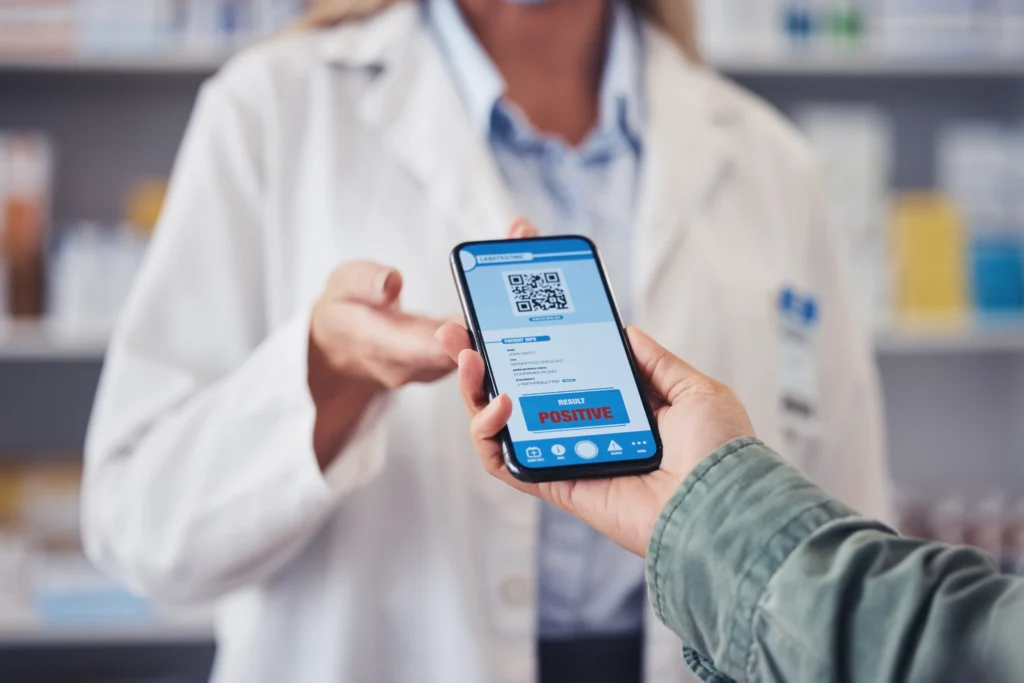
Not all authentication systems are created equal. Here’s what pharmaceutical manufacturers are actually choosing between:
Here’s the simple version, every box gets a unique scannable QR code. Customers scan it with their phone, see product details and batch info, and get a “verified” status. That’s it.
Everyone has a smartphone. No special equipment needed. It’s scalable; you can print it on millions of units daily. And it’s cheap to add to packaging, especially with systems like PharmaSecure’s TruTrak®.
Static QR codes can be duplicated if counterfeiters have the right printing tech. Some systems require database lookups, which can create delays. And honestly, not every customer will bother scanning.
Cost: Varies by packaging volume, code type, printing method, line integration, reporting requirements, and vendor support model. Manufacturers should request a written quote that separates per-unit printing costs, software fees, hardware costs, integration charges, and support fees.
Status: CDSCO mandates it for India’s top 300 brands. It’s spreading globally.
This goes deeper. Each unit gets a unique serial number, printed and logged in a centralized database at manufacturing. As the product moves through distributors, wholesalers, and pharmacies, every handoff gets recorded.
The benefit? Manufacturers see exactly where products are going (goodbye, grey market diversion). Regulators can trace counterfeits back to the source. Customers know their medicine took legal channels, not black market routes.
Best approach: Combine QR codes with serialization. Customers scan for instant verification. Regulators trace the serial code through the supply chain. Manufacturers catch leakage. You get multiple verification layers.
The downside is infrastructure costs and supply chain integration complexity. But companies like PharmaSecure minimize redundancy with integrated systems.
Status: India’s Schedule H2 requirement mandates barcode or QR-code based product identification for notified top 300 drug formulation brands. Broader serialization and end-to-end track-and-trace capabilities may be adopted voluntarily or required for specific export markets. Most major pharma brands are now implementing enhanced track-and-trace for competitive advantage.
Holograms have been protecting pharmaceuticals for decades. Reality check: they’re still hard to fake at scale, but good counterfeiters have caught up. They’re supplementary now, not primary defense.
Where do they still matter? On the outer packaging as a quick visual legitimacy signal. Combined with QR codes, hologram signals quality visually, and QR provides cryptographic proof that they work well. Long-term brand loyalty matters too. If customers expect a hologram, taking it away just confuses them.
Limitations: can’t verify in real time, requires visual inspection, won’t work online.
Cost: ₹1- ₹5 per label, depending on customisation.
A customer snaps a photo. AI analyses it to check if it’s real. Sounds cool, but it isn’t ready yet.
The problems? AI and image-based authentication are emerging tools, but they should usually be treated as supplementary rather than primary authentication methods for pharmaceuticals. Their reliability can depend on image quality, lighting, camera angle, packaging condition, and the availability of validated training data. For regulated pharmaceutical use cases, deterministic methods such as unique codes, serialization, and verified database checks are generally easier to audit and explain.
Status: Limited pilots only. Not ready for mass deployment.
QR codes + serialization is the working standard now. Holograms remain useful as supplementary layers. AI might help eventually, but not today.
You’ve now seen how product authentication solutions work in theory. Implementing one requires choosing a provider. Here’s what separates industry leaders from vendors who’ll disappoint you.
1.Encryption-Based Code Generation (Not Database Dependent). If your cloud servers crash, can customers still verify products? Database-dependent systems fail during outages, cyberattacks, or if the company shuts down. You need encryption built into the code itself. No database lookup required.
2. Integration with Existing Production Hardware. Don’t let vendors force you to replace working equipment. Your production lines cost millions and run tight schedules. A good solution integrates with your current thermal printers, inkjet systems, and label applicators. PharmaSecure’s TruTrak® does this with minimal disruption and maximum compatibility.
3. Regulatory Compliance Across Multiple Markets. If you export, you need multi-market support. India’s CDSCO, the EU’s FMD, Russia’s CRPT, and the US Track & Trace each have different requirements. Don’t settle for vendors who only focus on India.
4. Real Supplier Support and Service. Production downtime kills revenue. For high-volume pharmaceutical packaging lines, it is advisable to ask for clearly defined support commitments, such as escalation contacts, remote support availability, on-site support options, uptime commitments, and response-time SLAs for critical incidents. Email support with a 48-hour response? That’s not acceptable.
5. Clear Pricing and Scale. Know your per-unit cost upfront, split from software and service fees. Volume discounts should be obvious from day one. Don’t pay enterprise prices for small production volumes.
Vendors claiming “100% security”? No system is perfect. Those promising “3-month implementation”? They haven’t worked with Indian manufacturers. Platforms that don’t integrate with your existing ERP or warehouse systems? They’ll create data silos.
Review volume-based pricing carefully. Volume discounts can be legitimate, but the proposal should clearly explain pricing tiers, minimum commitments, implementation fees, support charges, renewal costs, and any charges for additional reports, integrations, or packaging lines.
PharmaSecure’s approach to product authentication solutions differs from point providers. Instead of offering just QR codes or just serialization, the company builds integrated solutions addressing multiple brand protection layers. The psID® system comprises:
1. Code Generation (Encryption-Based): Each unit gets a unique, random alphanumeric code. The encryption is built into PharmaSecure’s patented algorithm. The key part? You don’t need a database lookup to verify it. The authenticity proof is embedded in the code itself. You can print these codes however you want as QR codes, GS1 2D Datamatrix codes, or even old-school barcodes. Whatever fits your packaging and production setup.
2. Hardware Integration (TruTrak® Suite): Specifically designed hardware for printing serialized codes on bottles, blisters, strips, and cartons during manufacturing. Works with existing production lines, has minimal downtime, and is compatible with 20+ OEM equipment types.
3. Consumer Verification Portal: When consumers scan the QR code using their smartphone, they reach a verification portal displaying:
4. Track-and-Trace Backend (psID® Trail™): For manufacturers and regulators who need supply chain visibility:
Polycab moved into consumer health products and faced the same counterfeiting problem as pharma companies. Gray market dealers were diverting stock. Retailers couldn’t tell authorized from unauthorized products. Counterfeiters were copying packaging.
They rolled out PharmaSecure’s QR code authentication with serialization across all products.
The results? Within six months, they identified and stopped gray market leakage. Consumer trust jumped 35%. Counterfeits dropped 70% in year one. Retailers could finally verify where the stock came from. Track-and-trace data revealed supply chain inefficiencies, cutting inventory costs by 15%.
The real lesson of authentication isn’t just about stopping fakes. It’s also a supply chain optimization tool.
1. What is the best product authentication solution for pharma manufacturers in India?
Depends on your size and budget. If you’re in India’s Top 300, QR codes are mandatory. But if you want real protection, combine QR codes with serialization and track-and-trace. That covers consumers, regulators, and supply chain visibility at once. PharmaSecure’s psID® is built for Indian pharma companies and works with 700+ production lines.
2. How does digital product authentication prevent counterfeiting?
Multiple ways. Each code is cryptographically unique; counterfeiters can’t guess it. Consumers scan and verify instantly before buying. You track where products go and catch unauthorized channels. When consumers, retailers, and distributors regularly verify products, counterfeiters face a much higher risk of detection. Plus, regulators get data to prosecute.
3. Is serialisation the same as product authentication?
No. Serialization tracks products (“Where is this?”). Authentication verifies (“Is this real?”). You need both working together.
4. What does a product authentication service cost in India?
Most companies recover costs in 18–24 months through gray market prevention and brand protection.
Stop catching counterfeits after they’ve already hurt your brand. Start preventing them before they reach customers.
We build product authentication solutions for Indian pharma companies. We know CDSCO mandates, global export rules, and how to integrate with your existing production lines.
Want to see if a proper authentication system could protect your brand? Let’s talk.
Get a Personalized Assessment →
We’ll look at your supply chain, find where counterfeits could slip in, and build a strategy that fits your size, markets, and regulations. Practical, implementation focused guidance. Just what you actually need.
Take the first step.


pharmasecue / January 29, 2026

PharmaSecure is a global track-and-trace, product authentication and consumer engagement company that has helped protect billions of packages through its technology-enabled solutions. Our proven serialization capabilities have enabled large pharmaceutical companies to meet different traceability requirements.





©2025, PharmaSecure Inc. All Rights Reserved.
