The global pharmaceutical supply chain is under pressure. Every year, the World Health Organization reports that 1 in 10 medicines in low and middle-income countries is substandard or falsified. That’s not a statistic. Those are real medications in patients’ hands, treatments they’re depending on, medicines that should help them, yet are entirely ineffective or worse, dangerous.
This is where track and trace solutions become critical.
For pharmaceutical manufacturers and distributors, this reality creates genuine business and ethical challenges. Every day brings the same pressing questions: Where exactly is our product in the supply chain? How can we guarantee authenticity at each handoff point? How much counterfeit product is already in the supply chain? Without visibility, there’s no answer. The repercussions are much more than operational. The reputation of the brand is damaged, violations of regulations become apparent and patient safety is at stake.
A track and trace pharma system can remove these blind spots by providing transparency. The full visibility spans from the time of production to the patient delivery. All motions are recorded, verified and kept permanently. Nothing moves without a record. No blind spots. No assumptions. Complete transparency.
Understanding how these systems work and why they matter is essential for any pharma business serious about supply chain security.
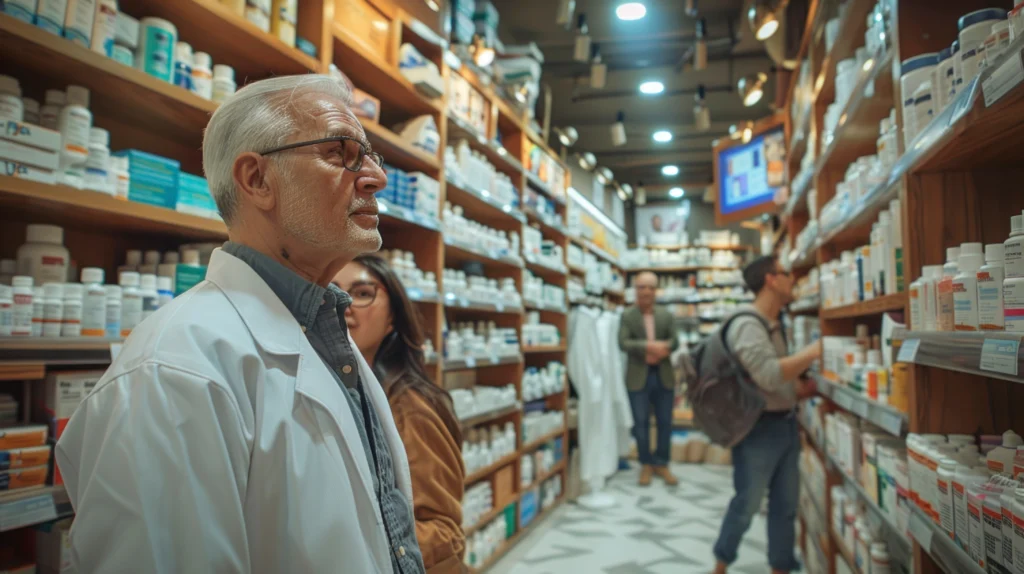
The pharmaceutical supply chain is complex. Your product doesn’t go straight from your factory to a patient. It travels through multiple hands: your warehouse, distributors, wholesalers, retailers, and finally, healthcare settings. Along this journey, visibility becomes fragmented. This fragmentation is where the problem starts.
The Four Hand-Off Points Where Product Integrity Breaks Down
Every pharmaceutical supply chain has vulnerable moments. These are the exact spots where visibility gaps appear and where counterfeit products can slip in undetected.
Manufacturing to Warehouse: The production line is controlled. Every pack gets a unique identifier before it leaves. But the moment those packs get boxed and stacked on a pallet, things get messier. Tracking shifts from automated systems to manual documentation and that’s where problems start. Without real-time verification, a shipment can be diverted right out of the facility, and nobody catches it until the distributor complains about a missing delivery.
Warehouse to Distributor: This handoff moves massive volumes. A single truck might carry thousands of packs destined for hundreds of retail locations. Distributors are juggling countless SKUs and shipments daily. Without a way to verify authenticity, counterfeits slip right into legitimate stock. It happens regularly, a technique called “diversion” where fake or sub-standard product enters the supply chain and nobody even knows it happened.
Retail and Hospitals: Once your products make it to shelves or hospital pharmacy counters, visibility pretty much disappears. Most retail chains and hospitals still rely on manual stock checks and visual inspections. They have no way to verify whether what they received matches what was shipped. A case sits in inventory with no verification trail, no record of authenticity, and no way to trace it back if a problem emerges.
Retail to Patient (Final Mile): The last step should be the safest, but it often isn’t. Patients receive medication with no way to verify its authenticity. A counterfeit product that made it through the entire supply chain reaches someone who has no tools to detect it. By then, it’s too late. Retailers traditionally have no way to verify that what they received is authentic unless someone physically checks each pack.
Retail to Patient (Last-Mile Delivery): The final handoff is supposed to be to the patient, but counterfeits often get intercepted here. Patients have no way to verify authenticity unless the product comes with an obvious anti-counterfeit measure.
Without a comprehensive track and trace system for pharma packaging, these four critical points remain blind spots.
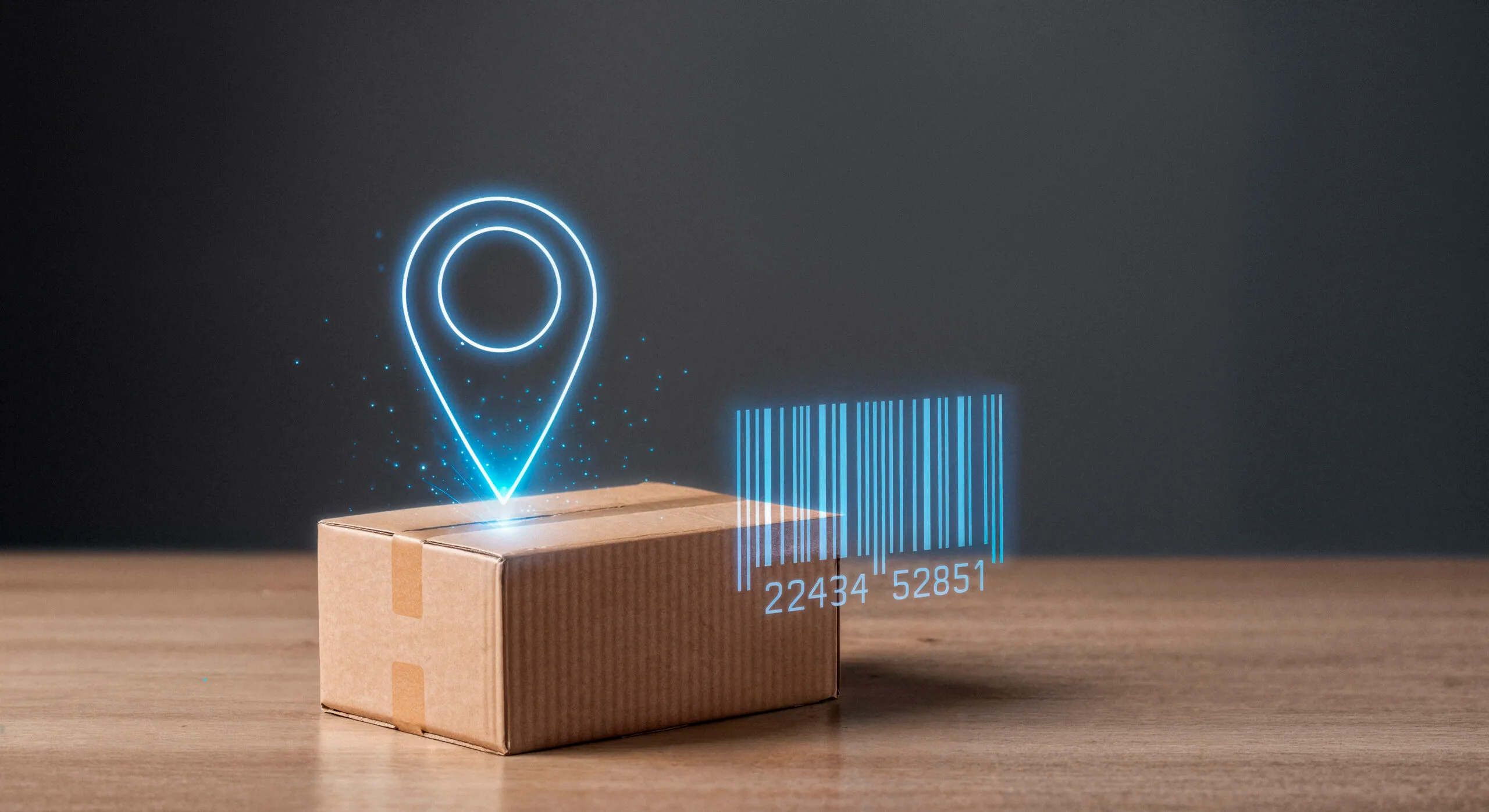
Modern track and trace in pharma industry solutions shift the entire equation. All packs, cases and pallets are assigned a unique digital identity with standardized codes. These are not normal Barcodes. They are encrypted, serialised identifiers that create an unalterable supply chain of custody.
There are four stages in the system. Every pack gets a code before it leaves the factory. At every handoff, authorized people check the codes and document them. The database is locked down, tamper-proof, and tracks everything in real time. The product is scanned on delivery to the patient, authenticating the full chain of custody.
The result is unparalleled visibility. Previously, disconnected and fragmented information has been replaced by continuous and real-time flow of information in their supply chains. The traceability and tracking of every product are documented, traceable and verifiable at any time. Management shifts from guessing to knowing.

It’s important to understand that a pharma track and trace solution provider doesn’t just offer software. A complete system integrates three critical layers: serialization, aggregation, and verification.
Serialisation is the foundation of any modern track and trace solutions system. Serialisation assigns unique, non-repeating codes to pharmaceutical units. The critical question it answers: Is this product genuine?
When serialised correctly, each pack will have an ID number that is unique.
The beauty of serialisation in modern systems is that it doesn’t require a massive central database vulnerable to hacking. Instead, the technology uses cryptographic methods that verify authenticity at the point of scan whether that’s in a warehouse, retail store, or hospital.
This is why choosing the right pharmaceutical tracking technology matters. Not all serialization systems are equal.
Serialization monitors individual packs, and aggregation extends track and trace pharma capabilities throughout the entire supply chain network. The system includes four hierarchical levels: individual packs, cases, pallets, and full load. A full track and trace system keeps a track of all four layers providing full visibility of the distribution network.
This generates tangible operational benefits. Distributors can check the entire case without opening and inspecting individual packs. Logistics teams do not verify shipments at intermediate distribution points.
Receiving warehouses cross-check cases and pallets against dispatch records in seconds. More importantly, if a case fails verification, warehouse teams immediately know which specific packs require investigation.
Without aggregation, the alternative is manual verification of thousands of individual packs, an expensive, time-consuming process that creates operational bottlenecks. With aggregation, pharmaceutical coding and traceability become genuinely efficient and scalable.
Every scan is a verification event. These events create the audit trail that proves product integrity. When should verification happen?
Verifications are assigned a timestamp and geo-tagging data. Combined, these events tell the complete story of a product’s journey. If a product appears in two places simultaneously, or skips a required checkpoint, the system flags it immediately.
This is the power of a real track and trace pharma system it’s not just about knowing where your product is; it’s about proving where it’s been and that every step was legitimate.
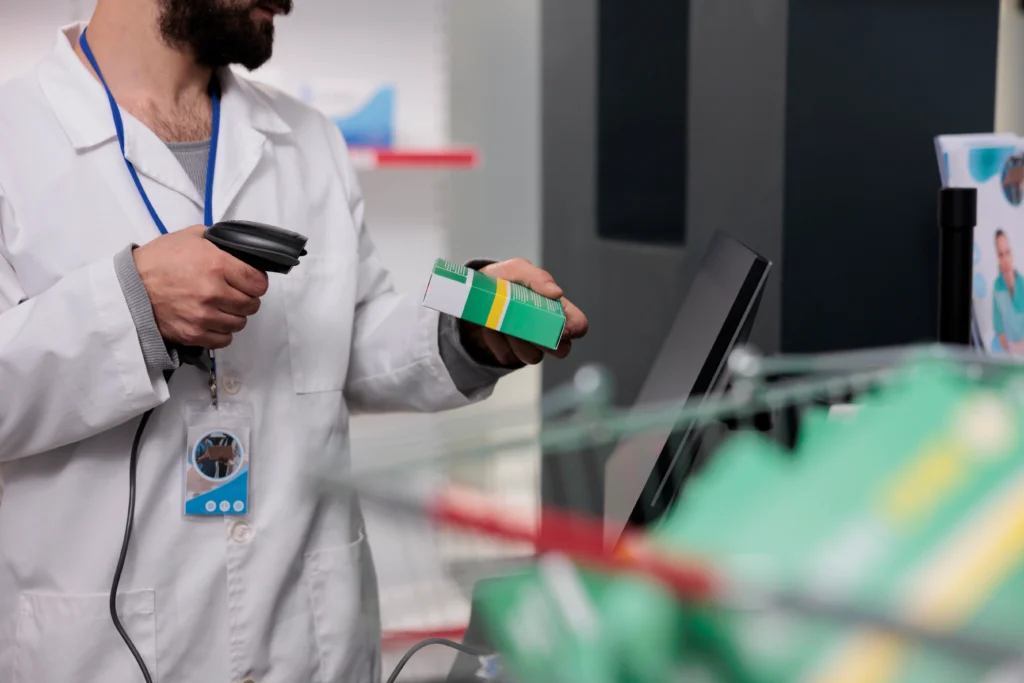
If you’re considering implementing a pharma track and trace solution provider’s system, you need to evaluate it rigorously. Here are the five technical criteria that matter most:
GS1 standards are the global language of supply chain identification. EPCIS (Electronic Product Code Information Services) is the protocol that lets supply chains share track and trace data across borders and between trading partners.
Why does this matter to you?
Exporting to the EU, India, Russia, or other regulated markets means GS1 standards aren’t optional; they’re required. A track and trace system that doesn’t meet GS1 standards causes real headaches as you expand globally. Every country has its own rules, and if you don’t comply, it slows everything down.
When evaluating solutions, confirm:
Here’s a practical reality: you already have enterprise systems running your business. Your ERP (Enterprise Resource Planning) system and WMS (Warehouse Management System) are where your inventory, production, and dispatch data live.
A track and trace system for pharma packaging that doesn’t integrate with these systems creates dual data entry and reconciliation nightmares.
The right solution:
Here’s an important distinction: does the system track only primary packaging (the box the patient receives) or does it extend to secondary and tertiary packaging (cases and pallets)?
A pharmaceutical tracking system that only covers primary packaging gives you visibility at retail but not in your own warehouse or distributor networks. A track and trace solution that covers all three levels gives you complete supply chain visibility.
Full supply chain coverage means:
This is where PharmaSecure’s psID® Trail™ Track and Trace System enters the picture. Built on 15+ years of pharmaceutical supply chain expertise, it represents a proven approach to track and trace pharma implementation.
PharmaSecure’s solution works like this:
(1) At Your Production Line:
(2) In Your Warehouse:
(3) Throughout Distribution:
(4) Retail and Hospital:
The Result: A complete, unbroken chain of custody from your factory floor to the patient’s hand.
Real implementation doesn’t happen overnight. A typical implementation for a mid-size manufacturer with 10 SKUs is:
Phase 1: Foundation (Months 1-2)
Phase 2: Expansion (Months 3-4)
Phase 3: Full Deployment (Months 5-6)
Phase 4: Optimization (Months 7+)
Throughout this timeline, the organization develops a track and trace solution that goes beyond regulatory compliance and it becomes a measurable competitive advantage.
A pharmaceutical track and trace solution is a combination of hardware, software and operational processes that are used to place a unique identifier on each pack and track it up and down the entire supply chain. It enables the manufacturer, distributor, retail pharmacist and patient to check the authenticity and track the entire manufacturing-to-consumer chain. This leads to counterfeit and diversion prevention with complete compliance to regulation.
Not exactly. Serialization and track and trace are two different but closely related concepts. Here’s the key difference: serialization gives each pack its own unique code that’s your basic foundation. Track and trace is the bigger system that uses those codes to monitor and verify exactly where your products go throughout the entire supply chain. Serialization generates the identifier, and track and trace use the identifier to give visibility. Both are essential. They are not effective when used in isolation. Working together is the key to a full solution.
With more than 15 years of industry experience and 700+ production lines installed throughout India, PharmaSecure is a leading solution provider for a pharma track and trace solution in India. We deliver track and trace systems that are built to hit India’s regulatory requirements perfectly: DMDP amendments, QR coding mandates for the top 300 pharma brands in the entire country, every single thing on the list. Yes, other vendors exist, but PharmaSecure’s deep regulatory expertise and proven track record with major manufacturers is exactly why large-scale pharma companies choose us as their preferred partner.
India requires strict compliance standards across the entire pharmaceutical sector:
PharmaSecure stays on top of regulatory changes and regularly updates your system, so your company always meets the latest requirements as standards continue to evolve and change.
“Implementation” is not an option, but a necessity. The problem of counterfeiting is growing, and the pressure on regulations is growing. A delayed organization is a lost organization.
PharmaSecure provides customizable supply chain traceability demonstrations for each manufacturer’s environment. The consultation process involves a full walk-through of the current supply chain, identification of key visibility gaps and the design of a customised implementation roadmap relevant to the company’s production and distribution chain.
Your products deserve protection. Your patients deserve authenticity. Your business deserves visibility.
Contact PharmaSecureToday and take the first step toward a fully traceable, transparent, and secure pharmaceutical supply chain.
PharmaSecure: Making pharmaceutical supply chains secure, transparent, and compliant since 2010.


pharmasecue / December 29, 2025

PharmaSecure is a global track-and-trace, product authentication and consumer engagement company that has helped protect billions of packages through its technology-enabled solutions. Our proven serialization capabilities have enabled large pharmaceutical companies to meet different traceability requirements.





©2025, PharmaSecure Inc. All Rights Reserved.
